Wash day sounds like an event because, for a lot of people, it has become one — a sink full of bottles, a two-hour routine copied from someone with completely different hair, and a result that still feels dry or greasy by the next morning. It does not need to be that complicated. The right routine depends mainly on how your hair is shaped, because straight, wavy, curly, and coily hair move oil and water in different ways.
This is a first-timer's version for Indian Trail readers who want a workable weekly rhythm: what to do, in what order, and how often. Once the basic sequence makes sense, you can adjust the products instead of rebuilding the whole routine every month.
Start with what your hair type changes
Scalp oil travels easily down a straight strand, so straight hair often looks oily sooner and usually needs more frequent washing. Waves slow that oil down a little. Curls and coils slow it a lot, which is why textured hair often feels dry at the ends even when the scalp needs cleansing. That one difference explains most wash-day advice: clean the scalp on a schedule that suits it, and add moisture back where the oil never reaches.
Thickness and lifestyle matter too. Fine hair gets weighed down quickly. Thick hair takes longer to wet and dry. Sweaty workouts, hats, and summer humidity in the Piedmont can all shorten the time between washes, whatever your type.
The basic sequence, step by step
- Detangle before water, if your hair is curly or coily. Work in sections with fingers or a wide-tooth comb and a little conditioner or detangler. Straight and wavy hair can usually detangle gently after conditioning instead.
- Wet the hair completely. Rushing this step is common. Hair that is only partly wet will not clean evenly, and shampoo will sit in patches.
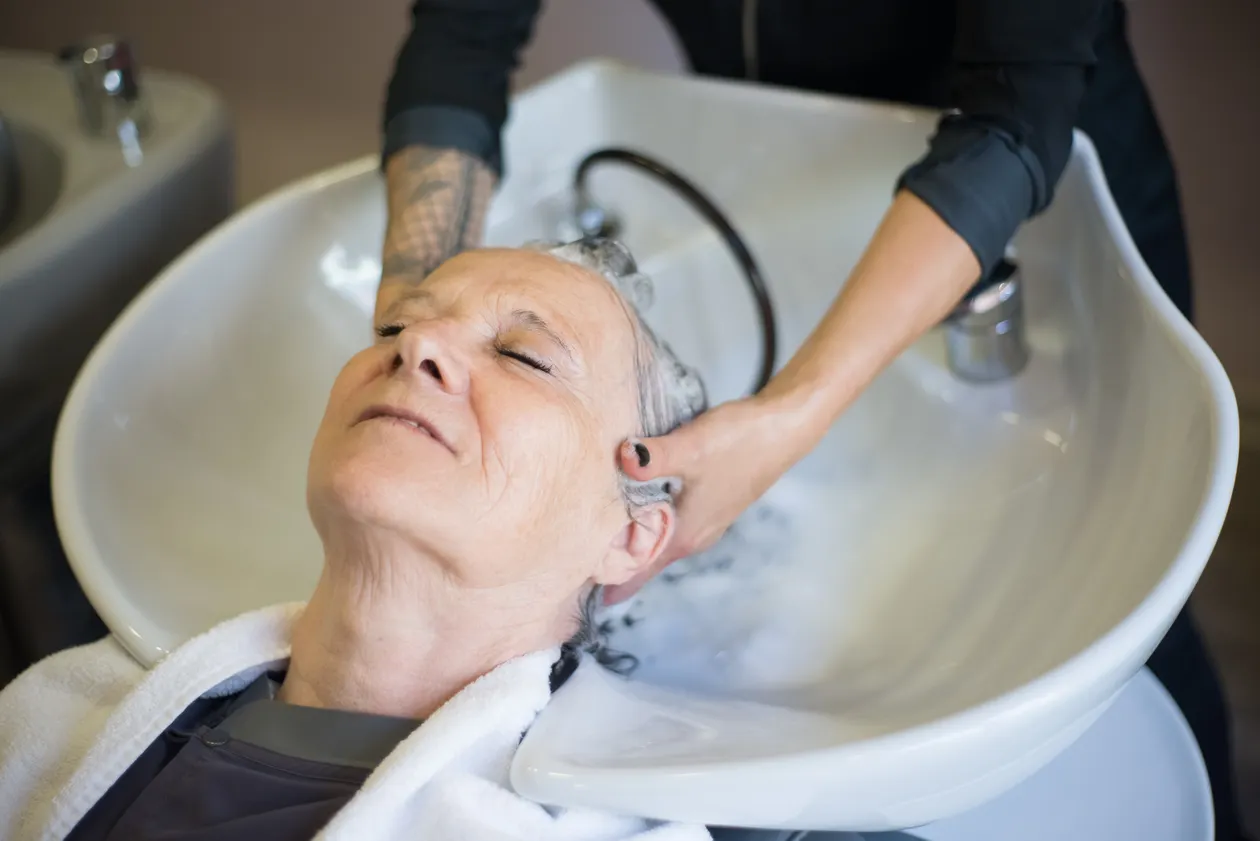
- Shampoo the scalp, not the lengths. Use fingertips, not nails, and massage in small circles. Let the rinse carry shampoo through the ends rather than scrubbing them. Repeat only if the first wash barely lathered or buildup is heavy.
- Condition from mid-length to ends. Keep most conditioner off the scalp unless your hair is very dry. Leave it on for a few minutes, then detangle gently while it is still in the hair if needed.
- Rinse and remove excess water. Squeeze, do not wring. A soft T-shirt or microfiber towel causes less frizz than a rough bath towel for waves, curls, and coils.
- Add leave-in or styling product to damp hair. Use less than you think for fine or straight hair, and work in sections for thick, curly, or coily hair so the product actually reaches all of it.
- Dry in the way your type prefers. Straight hair can air-dry or blow-dry. Waves do well scrunched and left alone. Curls and coils often need either careful air-drying or a diffuser on low heat so the pattern sets instead of puffing.
A weekly rhythm by type
Straight hair often lands on washing every two to three days, with conditioner kept light and mostly on the ends. Wavy hair commonly does well two to three times a week, with a little more moisture and less brushing once dry. Curly hair often settles into once or twice a week, with a conditioning rinse on other days if needed. Coily hair frequently does best with a full wash once a week or every ten days, plus moisture refreshes between washes.
Those are starting points, not rules. An itchy scalp, flakes, or a sour smell means wash sooner. Hair that snaps, feels rough, or frizzes immediately after drying may need less shampoo, more conditioning time, or a clarifying wash if product has built up. Change one thing at a time so you can tell what helped.

The mistakes that make wash day harder
The first is using too much product to fix a problem caused by too much product. Heavy creams on fine hair, daily oils on an oily scalp, and layering three stylers all lead to buildup that makes hair look dull no matter how often it is washed. The second is scrubbing the lengths. Ends are the oldest, driest part of the hair; they need conditioning, not friction.
The third is skipping the scalp. Co-washing and conditioning rinses have a place, especially for dry curls, but most heads still need a real shampoo regularly to remove oil, sweat, and pollen — a real factor during spring in Indian Trail. If you are unsure where your routine is off, a stylist at Family Hairloom can look at your hair dry, ask what you are using, and usually spot the mismatch quickly.
Keeping it simple on purpose
A good wash day is repeatable. If a routine takes so long that you start dreading it and stretching washes too far apart, the scalp pays for it. Keep a basic shampoo, a conditioner that suits your type, one leave-in or styler, and a clarifying shampoo for occasional use. That short shelf handles most weeks.
Common questions
Do I need to shampoo twice every wash?
Not usually. A second shampoo helps when there is heavy buildup, a lot of styling product, or the first wash barely lathered. For a routine wash, once is often enough.
What is a clarifying shampoo for?
It removes stubborn buildup from products, minerals, and oils that regular shampoo leaves behind. Most people need it only occasionally, followed by a good conditioner.
Should I wash after every workout?
Not necessarily. Rinse with water or refresh the scalp if sweat is light, and save a full shampoo for when the scalp feels itchy, oily, or coated.
Photos in this guide are representative stock images.
← All guides from Family Hairloom← Back to Family Hairloom